More information
- Remon Westra
- Sales & Account Manager
- +31 (0) 6 21931522
- #114,46,119,101,115,116,114,97,64,110,101,119,101,110,101,114,103,121,99,111,97,108,105,116,105,111,110,46,111,114,103


Carbon Capture, Utilisation and Storage (CCUS) is a critical technology in the effort to reduce CO₂ emissions and achieve climate goals. This intensive course provides a comprehensive understanding of the full CCUS value chain, from CO₂ capture to safe storage and reuse.
The programme examines the technologies behind CCUS as well as the economic feasibility of projects, investment models, policy frameworks and the challenges involved in large-scale implementation. Real-world projects connect the technical principles of CCUS directly to current developments in practice.
Over three days, participants explore the technologies, business considerations and policy developments that shape the deployment of Carbon Capture, Utilisation and Storage.
The programme covers the CCUS chain end to end and connects academic and technical insight with real-world implementation. Participants examine current projects and innovations and consider how CCUS can be deployed at scale as part of wider decarbonisation strategies.
Interactive sessions and expert contributions support the translation of CCUS knowledge into practical decision-making within participants’ own organisations.
You receive one year of access to all course materials via our Online Learning Platform, allowing you to revisit the content whenever needed. After completing the course, you receive a digital certificate of participation that can easily be added to your LinkedIn profile.
Accommodation is not included, but our event managers are happy to recommend suitable hotels. A dedicated event manager will be on site throughout the course to ensure everything runs smoothly and assist with practical questions.
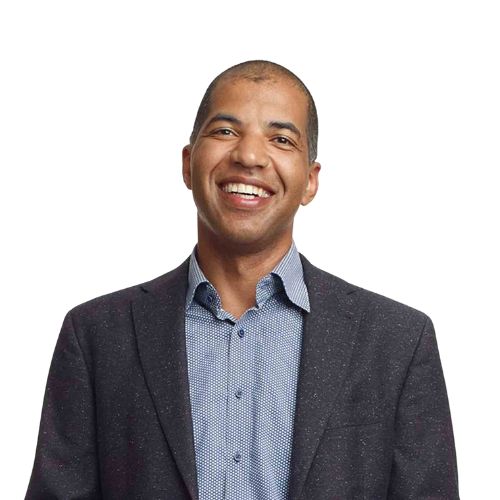
Prof. Dr. Earl Goetheer holds an MSc in Organic Chemistry and Process Engineering from Wageningen University and a PhD in Chemical Engineering from Eindhoven University of Technology, where he specialized in high-pressure CO₂ applications. With over 25 years of experience in the field of chemical engineering, he has built a distinguished career at the intersection of academia, innovation, and industry.
Currently, Earl serves as Chief Technology Officer at HighTechXL, a leading deep-tech venture builder based in the Netherlands. HighTechXL has supported the acceleration of 63 startups and the creation of over 20 new ventures. In addition to his role at HighTechXL, Earl is appointed as a part-time professor at Delft University of Technology, where he focuses on the field of Power-to-Chemicals and key lecturer at New Energy Business School.
He is the author of more than 100 scientific publications and holds over 55 patents in the area of process engineering.
You can easily register online for this programme.