Discover the world of Ammonia
Ammonia as an energy carrier, storage medium and chemical feedstock
From production and storage to its use as an energy carrier and chemical feedstock, this masterclass provides an in-depth understanding of the versatile applications of ammonia within the energy transition.
How you benefit:
- Gain insights into ammonia as an energy carrier and its potential within the energy transition.
- Understand the role of ammonia in hydrogen value chains and its contribution to emission reduction.
- Deepen your knowledge of production processes, including electrolysis and the Haber-Bosch process, storage technologies such as cryogenic tanks, and ammonia-to-hydrogen conversion.
- Learn about economic and policy-related aspects, including cost analysis, subsidies, emission trading systems and international certification, such as ISCC and CertifHy.
Ammonia is increasingly recognised as a key enabler in the global energy transition. With its unique properties as an energy carrier, storage medium and feedstock, ammonia can help address challenges in energy storage and transport. From applications in shipping and industrial processes to its connection with hydrogen production, ammonia has the potential to play an important role in a low-carbon economy.
In one day, we explore the technological, economic and policy-related aspects of ammonia and examine how this technology contributes to a low-carbon future. Topics include the role of ammonia in the hydrogen value chain, the development of cracking technology, and the safety and environmental challenges associated with its use.
After this masterclass, you will be able to
- Understand the role of ammonia as an energy carrier, including its storage, transport and production.
- Evaluate green versus grey ammonia and distinguish their applications within the energy transition.
- Analyse the technical requirements for storage facilities and pipeline systems.
- Interpret economic aspects such as costs, subsidies and certification standards.
- Gain insight into the geopolitical impact and market developments in ammonia production.
- Effectively apply innovations in the Haber-Bosch process and ammonia cracking technology.
- Critically assess safety and environmental aspects, including toxicity and emission risks.
- Develop strategic insights for the integration of ammonia fuel cells.
What to expect during a masterclass
In addition to inspiring content and valuable connections, we ensure a seamless learning experience. After the session, you will receive a digital certificate of attendance, which you can easily add to your LinkedIn profile. Speaker presentations will be shared as reference material, making it easy to revisit what you have learned or share it with colleagues. Naturally, a well-catered lunch is included, along with healthy snacks throughout the day.
Our event manager will be on site to ensure everything runs smoothly and to support you wherever needed.
Who is it for?
This masterclass is designed for professionals seeking to learn more about the role of ammonia in the energy transition, including:
- Policymakers and strategists working on sustainable energy issues and regulations surrounding alternative fuels.
- Industry professionals, such as energy producers, chemical companies and transport operators involved in ammonia production, storage or transport.
- Researchers and academics focused on innovative energy technologies and new applications of ammonia.
- Consultants and advisors in energy, environment and technology fields who provide strategic guidance on ammonia as part of the energy transition.
Wheher you are an experienced professional or new to the field, this masterclass offers valuable knowledge and perspectives to contribute to a more sustainable future.
- Lecture 1 Tuesday 13 April 2027 08:30 - 17:00
- LocationRotterdam, The Netherlands
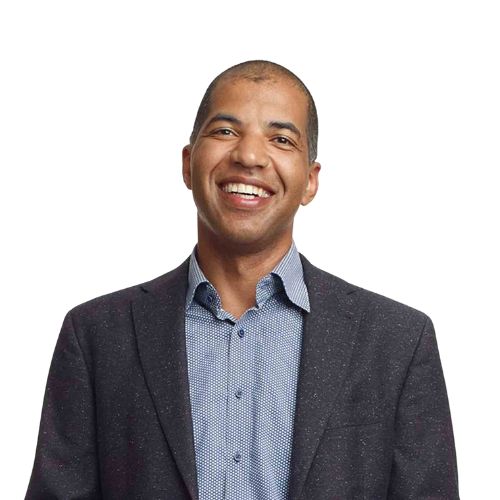
Prof. Dr. Earl Goetheer holds an MSc in Organic Chemistry and Process Engineering from Wageningen University and a PhD in Chemical Engineering from Eindhoven University of Technology, where he specialized in high-pressure CO₂ applications. With over 25 years of experience in the field of chemical engineering, he has built a distinguished career at the intersection of academia, innovation, and industry.
Currently, Earl serves as Chief Technology Officer at HighTechXL, a leading deep-tech venture builder based in the Netherlands. HighTechXL has supported the acceleration of 63 startups and the creation of over 20 new ventures. In addition to his role at HighTechXL, Earl is appointed as a part-time professor at Delft University of Technology, where he focuses on the field of Power-to-Chemicals and key lecturer at New Energy Business School.
He is the author of more than 100 scientific publications and holds over 55 patents in the area of process engineering.
Register
You can easily register online for this programme.