More information
- Remon Westra
- Sales & Account Manager
- +31 (0) 6 21931522
- #114,46,119,101,115,116,114,97,64,110,101,119,101,110,101,114,103,121,99,111,97,108,105,116,105,111,110,46,111,114,103


Carbon capture, utilisation and storage is entering a new phase. Individual projects are developing into larger, interconnected value chains, while technologies for carbon capture, carbon dioxide removal, CO₂ transport, geological storage and utilisation continue to advance.
The CCUS Symposium 2027, organised together with TNO, brings together professionals and experts from research, industry and the wider European CCUS ecosystem.
The symposium focuses on the technological developments, R&D, operational experience and scale-up challenges that will shape the next phase of CCUS in Europe.
The symposium is primarily designed for mid- and senior-level professionals working with CCS, CCU, carbon dioxide removal or related infrastructure who want to deepen their understanding of current developments. Professionals who are newer to the field are also welcome, particularly if they already have a basic understanding of CCUS and are looking to build their knowledge through expert perspectives and discussion.

The CCUS Symposium combines plenary expert perspectives with two rounds of in-depth technical break-out sessions.
The programme opens with a European and strategic perspective on the development of CCUS, followed by a keynote on technology, innovation and R&D within CCUS and carbon dioxide removal.
The technical break-out sessions form the core of the symposium. Participants select two different themes and work in smaller groups with experts from research and industry. The interactive format creates room to examine technological developments in greater depth, discuss practical experience and address questions that are difficult to explore in a standard conference setting.
Four main themes are covered throughout the symposium:
Following the break-out sessions, key insights, questions and observations are brought back to the plenary group. The formal programme concludes in the afternoon, followed by networking drinks.
What you learn
The CCUS Symposium is designed for mid- and senior-level professionals who are already active in CCS, CCU, carbon dioxide removal or adjacent parts of the CO₂ value chain.
For example:
Please note: This symposium is not designed as an introduction to CCUS. Participants are expected to have existing knowledge of the field and to be able to contribute to technical and strategic discussions.
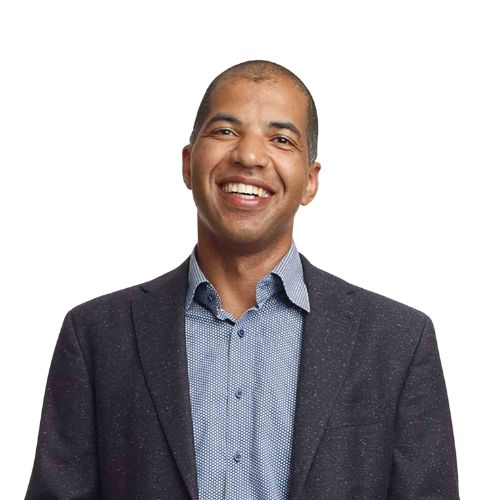
Prof. Dr. Earl Goetheer holds an MSc in Organic Chemistry and Process Engineering from Wageningen University and a PhD in Chemical Engineering from Eindhoven University of Technology, where he specialized in high-pressure CO₂ applications. With over 25 years of experience in the field of chemical engineering, he has built a distinguished career at the intersection of academia, innovation, and industry.
Currently, Earl serves as Chief Technology Officer at HighTechXL, a leading deep-tech venture builder based in the Netherlands. HighTechXL has supported the acceleration of 63 startups and the creation of over 20 new ventures. In addition to his role at HighTechXL, Earl is appointed as a part-time professor at Delft University of Technology, where he focuses on the field of Power-to-Chemicals and key lecturer at New Energy Business School.
He is the author of more than 100 scientific publications and holds over 55 patents in the area of process engineering.
You can easily register online for this programme.